
Today my heart is heavy. I have been laying in bed for almost 2 hours (it is the middle of the night here in Japan) and I can't stop thinking about the people up North and the anniversary of the March 11, 2011 Tohoku earthquake. I am sure many of you have seen pictures of the rebuilding that has happened over the past two years. Wrecked cars and debris have been taken away. Roads have been cleared. The airport has long ago reopened. Buildings have been repaired and some have even been rebuilt. The Fukushima nuclear plant has been contained. Amazing work has happened.
What lays on my heart at 3:21 am, is their hearts. Even two years later, aftershocks occur. Some of them large. Who comforts them each time the ground shakes beneath their feet? Do they close their eyes at night and relive the horror of watching the water come and take away everything they have ever known? People lost friends. People lost family members. Some people lost both. Have they found peace? What about the children who ran screaming as they were rushed to get to higher ground?
I was blessed to have been able to go to the Tohoku region two different times to help in the relief efforts. The first time was three weeks after the earthquake and the second was 2.5 months after the earthquake. I went on these trips hoping that I would be able to do something, however small, for these people suffering such a tragedy. What happened, was I walked away with more than what I probably ever gave back.
So today, March 11, take a few moments in your busy day to think and pray for the people in Japan who are still haunted by what happened at 2:46 pm on that day. And then take a few more moments to hug your children, call someone you may not have talked to in a while, tell someone you love them, cuddle with your pet on the couch. In a heartbeat, it could all be gone.
Showing posts with label tohoku. Show all posts
Showing posts with label tohoku. Show all posts
Monday, March 11, 2013


Monday, May 23, 2011
Tohoku Relief Trip #2
Two weeks ago I went back up to the Tohoku area, this time with three of my friends. I had seen pictures and heard stories from people who had gone up after my first trip, but I was interested to see for myself the progress that had been made since I was there, only 2.5 weeks after the disaster.
The actually highways were much worse to drive on than before. The roads had buckled under the pavement in areas all along the Tohoku and Sanriku Expressways from the initial 9.0 earthquake and then even more after the 7.4 aftershock in April. I think all the heavy trucks and traffic on these areas just made the roads wear faster. Needless to say, save admission on the amusement park tickets and just drive up to Northern Japan.
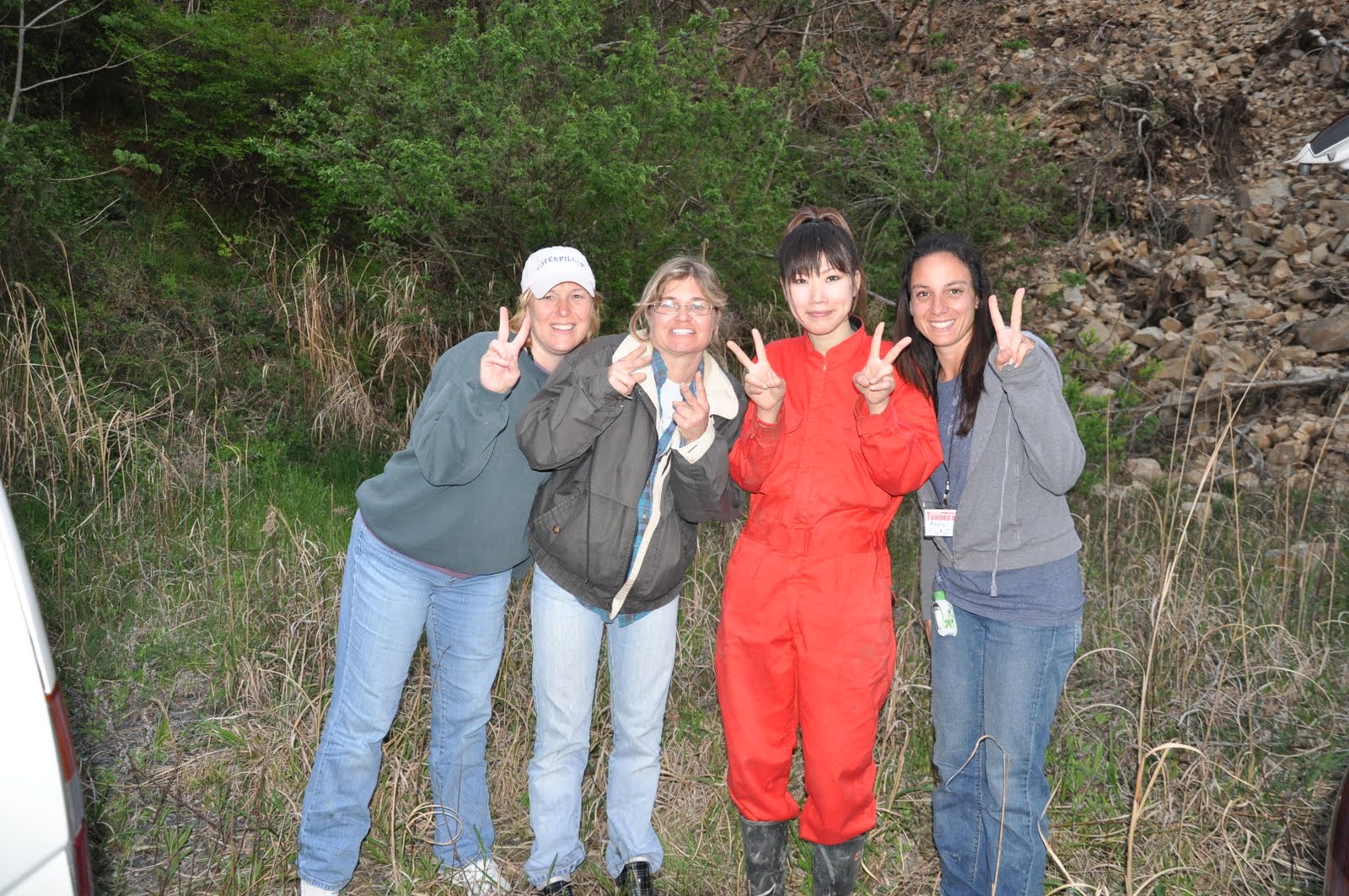
We were gone a total of four days –– two for traveling and two for actual work days. We met up the the same group I had worked with before, BeOne. They have been on the ground since the beginning and really know the areas needs and have established connections with some of the local people. While there we worked with a couple from the United States (they were actually gymnastics coaches from the Charlotte, NC area!), an American who is now living in Singapore, a Japanese woman from Osaka, another guy from California, an American boy who has lived in Japan his whole life and a guy from New Zealand. We were joined by a young woman, Maya, who actually lives in the area.
On the first morning when driving to the disaster area of Ishinomaki, I kept thinking how much had been done, yet how little. In many ways it seems like some areas had stuffed just moved from one place to another. Some areas were totally untouched. Cars were still everywhere. Some places the people cleaned up around their own house, yet all around them lies complete carnage. In one location the ground actually sunk, so at high tide everyday water flows into the roads and houses. And the smell. Imagine two month old stagnant water with rotting fish.


This trip consisted of doing supply drops and then working in those areas. Over the course of two days we did two food and supply drops, cleaned out a drainage system at a house, cleared dirt from the crawl space of a house, cleared mud from a house and garden area, and moved debris from a small swing set area so kids could come and play.


Besides doing manual labor and meeting the people physical needs, we also tried to meet their emotional needs. We talked with the people, listened to their stories and played with the children. I think in many ways this was more important than the actual work we were doing.


I have a hard time putting how this whole experience has affected me to "paper". My heart still aches and I think it will for a long time. It makes me sad that these people are already being forgotten as it is slowly becoming "out of sight, out of mind". It makes me more sensitive to other areas, which are experiencing their own hell trying to recover from tornadoes and flooding. In a blink of an eye lives can be forever changed. It could happen to any of us.
I met some awesome people, doing awesome work, on this trip. Ones who have no idea how in just two days meeting them impacted my life.


So this is my challenge to you. Go out and do something. Go change someones life. Go change your own life. Volunteer at a local soup kitchen. Go read with children. Make cards and take cookies to a nursing home. Donate blood. Take a meal to the family whose house burnt to the ground last week. Reach out to those who may be affected by a disaster in your own area. Go make a difference.
I have posted many more pictures from this trip here on my shutterfly account.
The actually highways were much worse to drive on than before. The roads had buckled under the pavement in areas all along the Tohoku and Sanriku Expressways from the initial 9.0 earthquake and then even more after the 7.4 aftershock in April. I think all the heavy trucks and traffic on these areas just made the roads wear faster. Needless to say, save admission on the amusement park tickets and just drive up to Northern Japan.
We were gone a total of four days –– two for traveling and two for actual work days. We met up the the same group I had worked with before, BeOne. They have been on the ground since the beginning and really know the areas needs and have established connections with some of the local people. While there we worked with a couple from the United States (they were actually gymnastics coaches from the Charlotte, NC area!), an American who is now living in Singapore, a Japanese woman from Osaka, another guy from California, an American boy who has lived in Japan his whole life and a guy from New Zealand. We were joined by a young woman, Maya, who actually lives in the area.
On the first morning when driving to the disaster area of Ishinomaki, I kept thinking how much had been done, yet how little. In many ways it seems like some areas had stuffed just moved from one place to another. Some areas were totally untouched. Cars were still everywhere. Some places the people cleaned up around their own house, yet all around them lies complete carnage. In one location the ground actually sunk, so at high tide everyday water flows into the roads and houses. And the smell. Imagine two month old stagnant water with rotting fish.


This trip consisted of doing supply drops and then working in those areas. Over the course of two days we did two food and supply drops, cleaned out a drainage system at a house, cleared dirt from the crawl space of a house, cleared mud from a house and garden area, and moved debris from a small swing set area so kids could come and play.


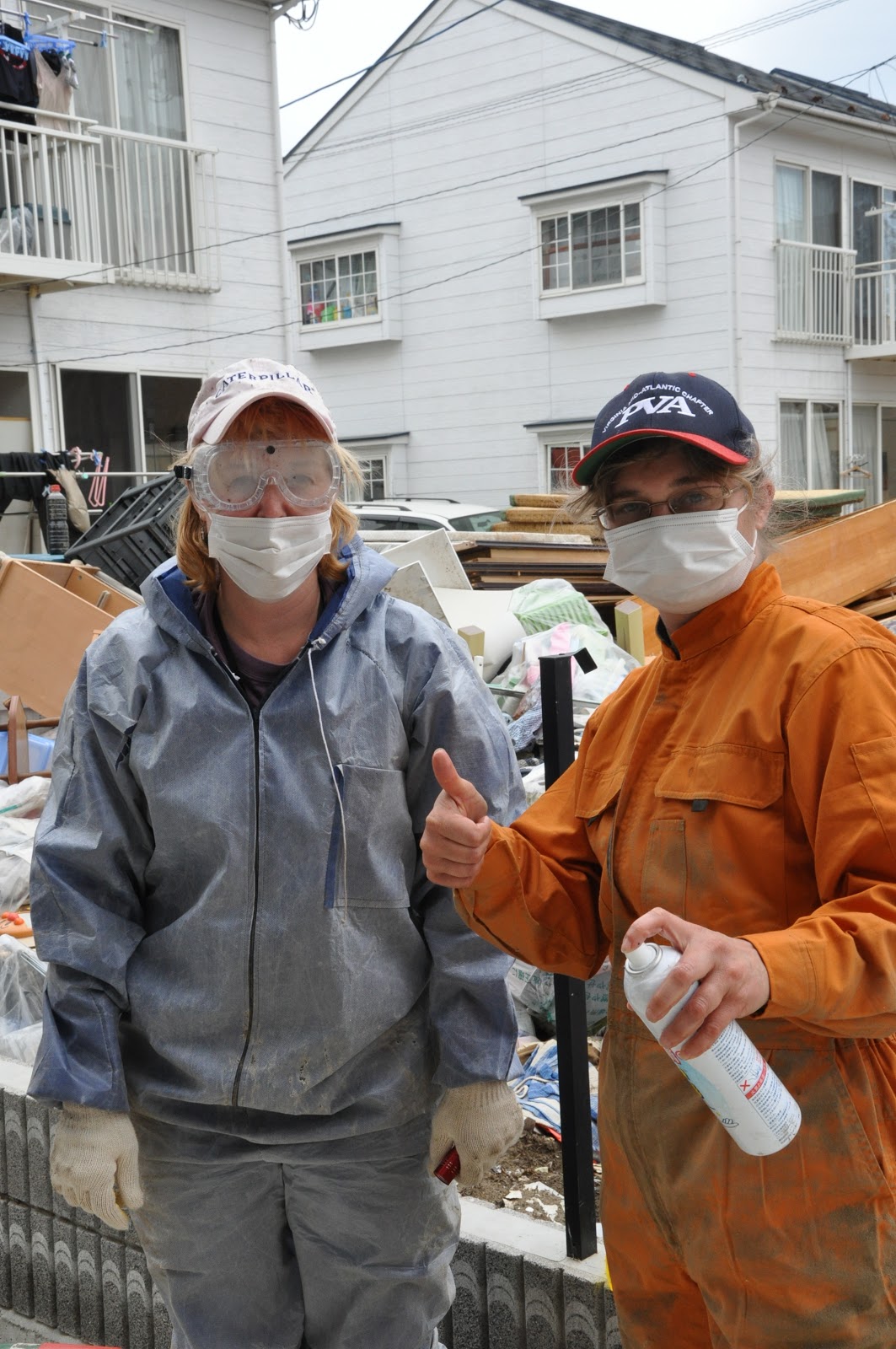


Besides doing manual labor and meeting the people physical needs, we also tried to meet their emotional needs. We talked with the people, listened to their stories and played with the children. I think in many ways this was more important than the actual work we were doing.


I have a hard time putting how this whole experience has affected me to "paper". My heart still aches and I think it will for a long time. It makes me sad that these people are already being forgotten as it is slowly becoming "out of sight, out of mind". It makes me more sensitive to other areas, which are experiencing their own hell trying to recover from tornadoes and flooding. In a blink of an eye lives can be forever changed. It could happen to any of us.
I met some awesome people, doing awesome work, on this trip. Ones who have no idea how in just two days meeting them impacted my life.

So this is my challenge to you. Go out and do something. Go change someones life. Go change your own life. Volunteer at a local soup kitchen. Go read with children. Make cards and take cookies to a nursing home. Donate blood. Take a meal to the family whose house burnt to the ground last week. Reach out to those who may be affected by a disaster in your own area. Go make a difference.
I have posted many more pictures from this trip here on my shutterfly account.
Tuesday, April 12, 2011
Getting Back to Blogging
I have found it hard to blog over the past month. I can't seem to figure what words to put to the screen. The past month has been full of heartache and turmoil for the people of Japan. People have lost their houses, their loved ones, their jobs, their personal belongings, their lives. On March 11, at 2:46 pm, people's lives changed forever. When I sit in front of the screen, everything I want to write seems so insignificant and trite compared to what has happened around me.
There has been hundreds of aftershocks since the 9.0 magnitude earthquake, with the past 24 hours having 68 alone. Almost a 1/4 of these 68 have been 5.5 magnitude and above. There seems to be a sense of nervousness every time an aftershock hits. Add to it the unstable nuclear situation and I think many people seem to be walking around waiting for the "other shoe to drop". Kobe is far away from both the Tohoku and Fukushima regions, but I still think people are anxious about the "what's next" or "what could be next." I know many of my expat friends worry about something happening here or what the future may hold. To be honest, I do too.
But life still goes on. People get up in the morning and go to work. Some meet friends for coffee, while others play with their children. If there is one thing I learned on my trip to the Tohoku region it was how much strength and grace the victims showed. They are perfect examples of no matter how grim and bleak a situation may be, life goes on. It has to. I think learning how to put one foot forward, no matter the circumstance, is part of the healing process.
This past Sunday, Matt and I walked around Kobe to see the beautiful cherry blossoms. Sakura season is famous in Japan. People come from all over just to admire the cherry blossom trees. I found it to be a very peaceful and cleaning afternoon.


We can either live in fear about what tomorrow may bring or we can live each day to the fullest because we never know what the future may hold. One of my favorite musicals, Rent, has a song that really says it all:
"Forget regret -- or life is yours to miss.
No other road, no other way
No day but today."
There has been hundreds of aftershocks since the 9.0 magnitude earthquake, with the past 24 hours having 68 alone. Almost a 1/4 of these 68 have been 5.5 magnitude and above. There seems to be a sense of nervousness every time an aftershock hits. Add to it the unstable nuclear situation and I think many people seem to be walking around waiting for the "other shoe to drop". Kobe is far away from both the Tohoku and Fukushima regions, but I still think people are anxious about the "what's next" or "what could be next." I know many of my expat friends worry about something happening here or what the future may hold. To be honest, I do too.
But life still goes on. People get up in the morning and go to work. Some meet friends for coffee, while others play with their children. If there is one thing I learned on my trip to the Tohoku region it was how much strength and grace the victims showed. They are perfect examples of no matter how grim and bleak a situation may be, life goes on. It has to. I think learning how to put one foot forward, no matter the circumstance, is part of the healing process.
This past Sunday, Matt and I walked around Kobe to see the beautiful cherry blossoms. Sakura season is famous in Japan. People come from all over just to admire the cherry blossom trees. I found it to be a very peaceful and cleaning afternoon.


We can either live in fear about what tomorrow may bring or we can live each day to the fullest because we never know what the future may hold. One of my favorite musicals, Rent, has a song that really says it all:
"Forget regret -- or life is yours to miss.
No other road, no other way
No day but today."
Subscribe to:
Posts (Atom)


